September 2025
Queenborough Guildhall Museum
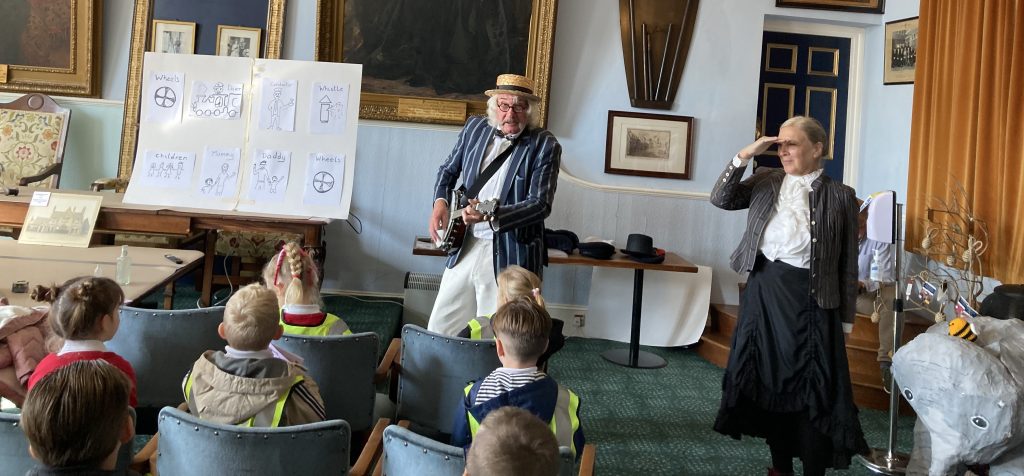
For 3 weeks, in late September and early October 2025, the team at Queenborough Guildhall Museum led by Caroline Howard created a truly magical Railway 200 and local history education experience at the Museum.
Over 240 local school children from Queenborough Primary School, Minster School and Halfway School participated.
All Aboard!
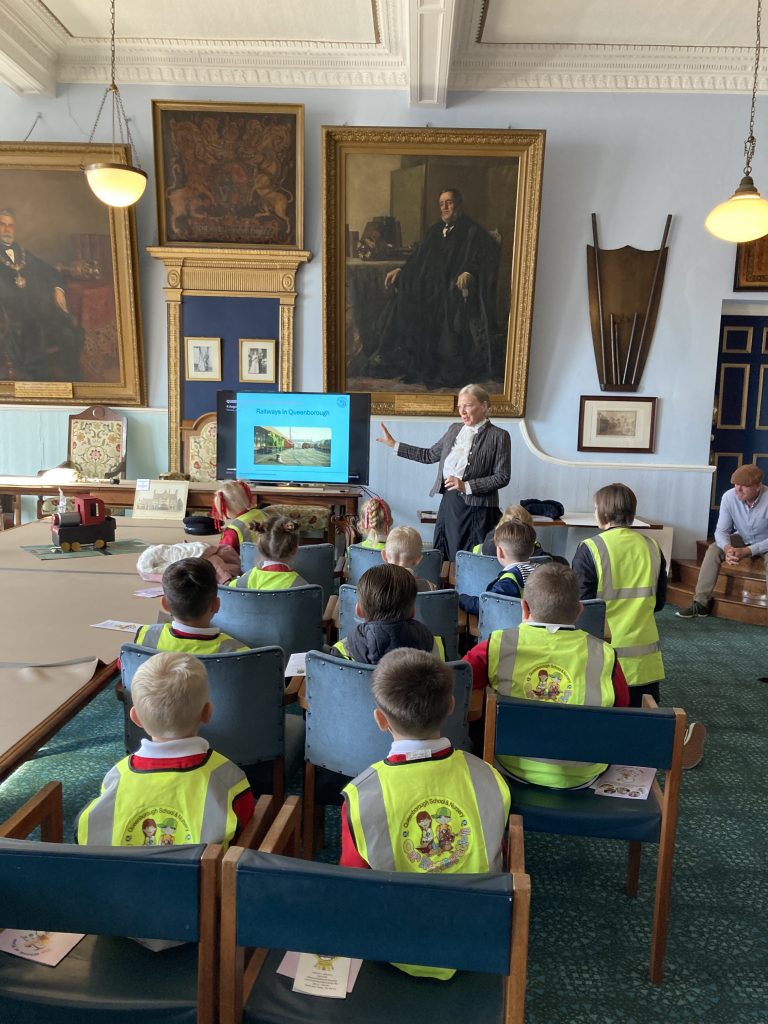
The education experience took place in the Town Council’s Chamber on the first floor. Arriving at the museum each participant was given a vintage style train ticket which would give them access to their upcoming voyage, learning about the old railways of Queenborough, the Flushing Pier, the Copperas Factory and its unique currency, all with a bit of a sing-a-long.
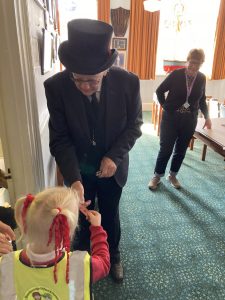
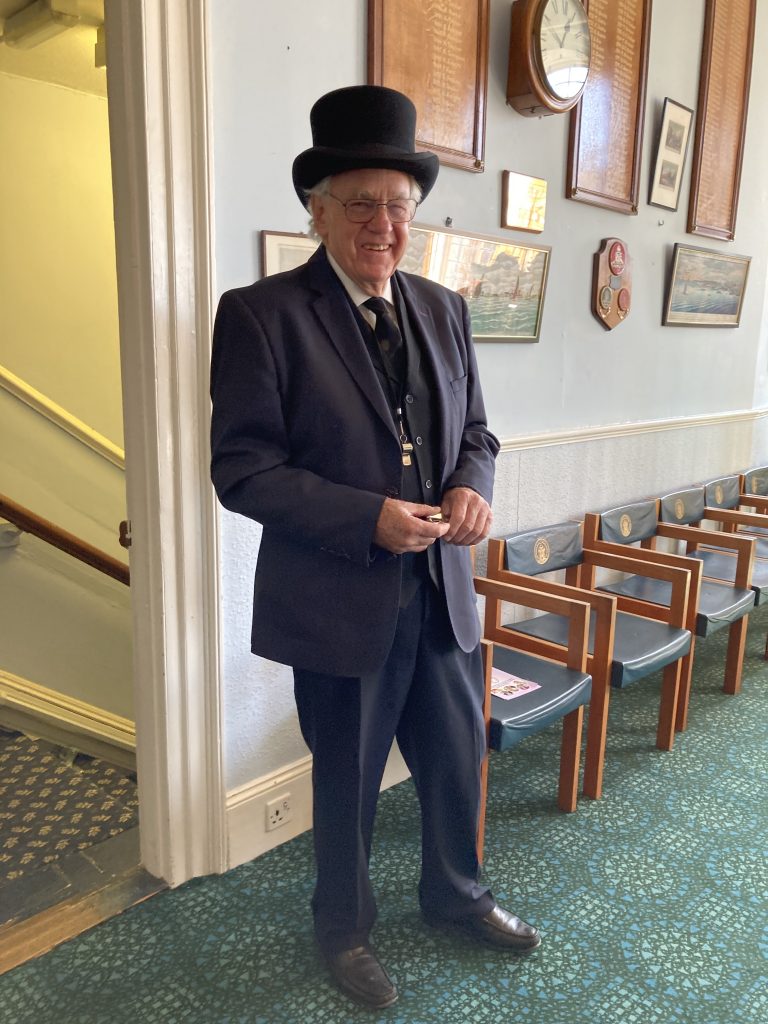
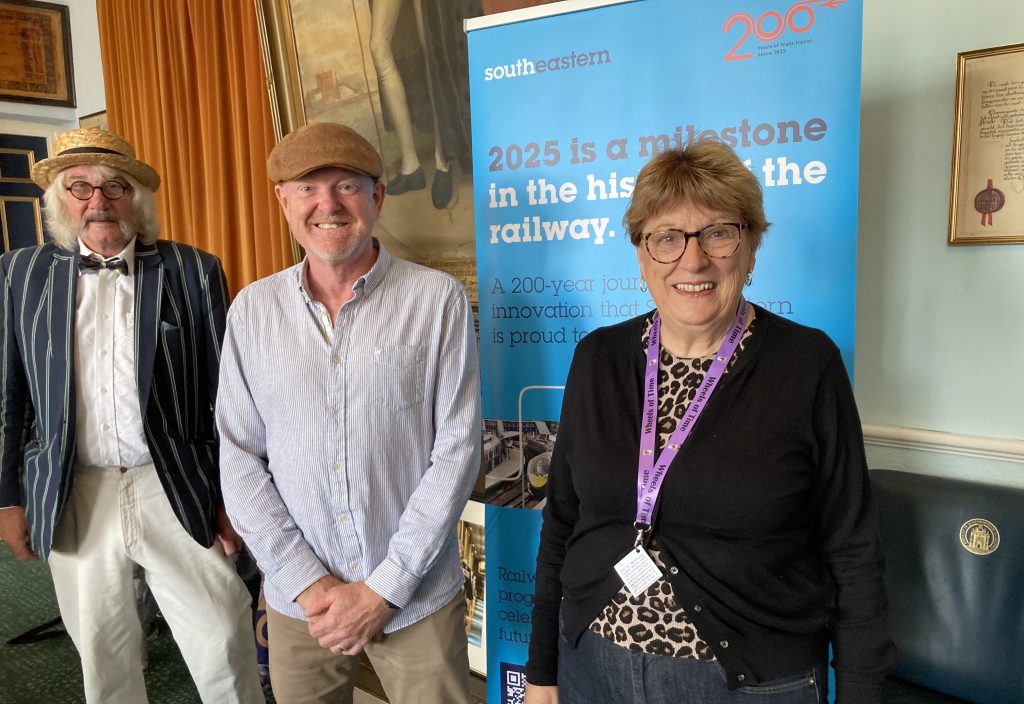
Walking up the stairs, they got ready to board and were greeted by a very well dressed, suited and booted, Train Conductor (played by volunteer Patrick Moore) who stamped their tickets.
Queenborough Historian Mark Kennedy shared information on the old railway and trams lines, the industries associated them, and structures such as the Flushing Pier which provided access via paddle steamer to Europe.
“The Wheels on the Track…..”
We were very lucky to have with us Geoff Reed from The Big Fish Arts who got everyone warm up and ready for a sing-a-long sharing a brilliantly entertaining and enjoyable train versions of the classic Wheels on the Bus, accompanied by visual cues to remember the lines and with pupils choreographing actions as they went along!
The House of COPPERAS, QVEENEBOROVGH
As part of Mark’s talk, he also shared information on the Copperas Factory and the development of Queenborough’s very own Copperas coin economy. Copperas is a term used for iron sulphate, it’s formed as part of fossilised wood, and can be found in abundance along the Sheppey shoreline.
From 1579 onwards, Queenborough residents would forage this natural resource along the seashore and bring it to the Copperas Factory, where it would be used to help make ink and other products. In return, they would be given Copperas Coins which they could use in the local shops of Queenborough to buy food and other staples.
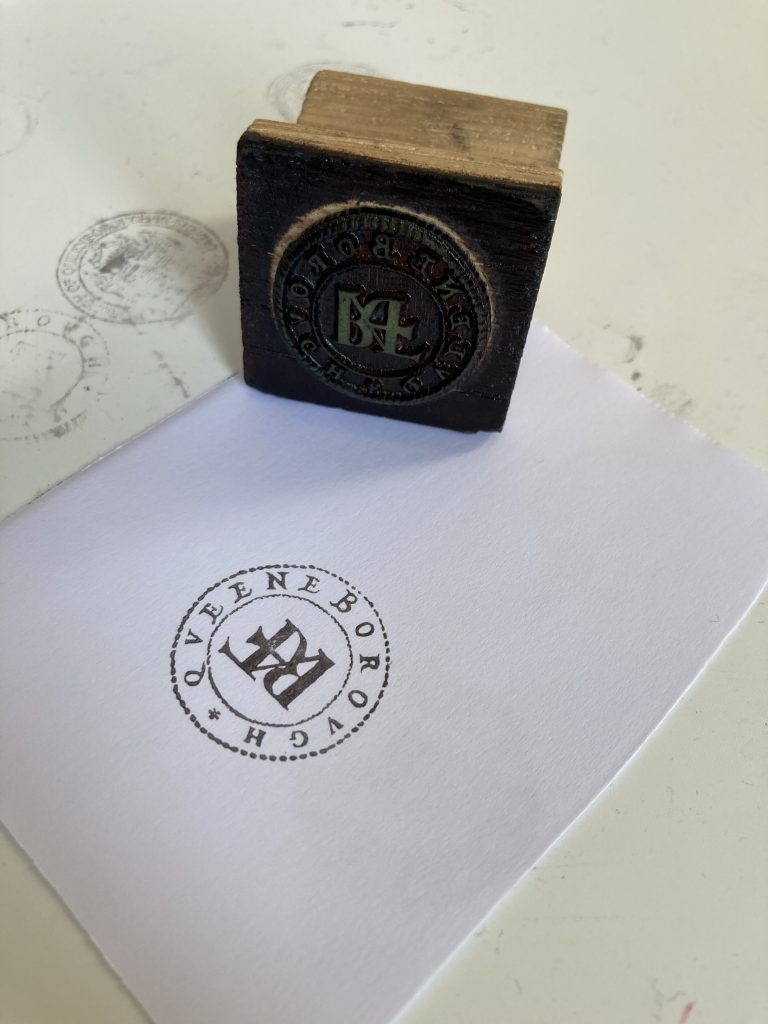
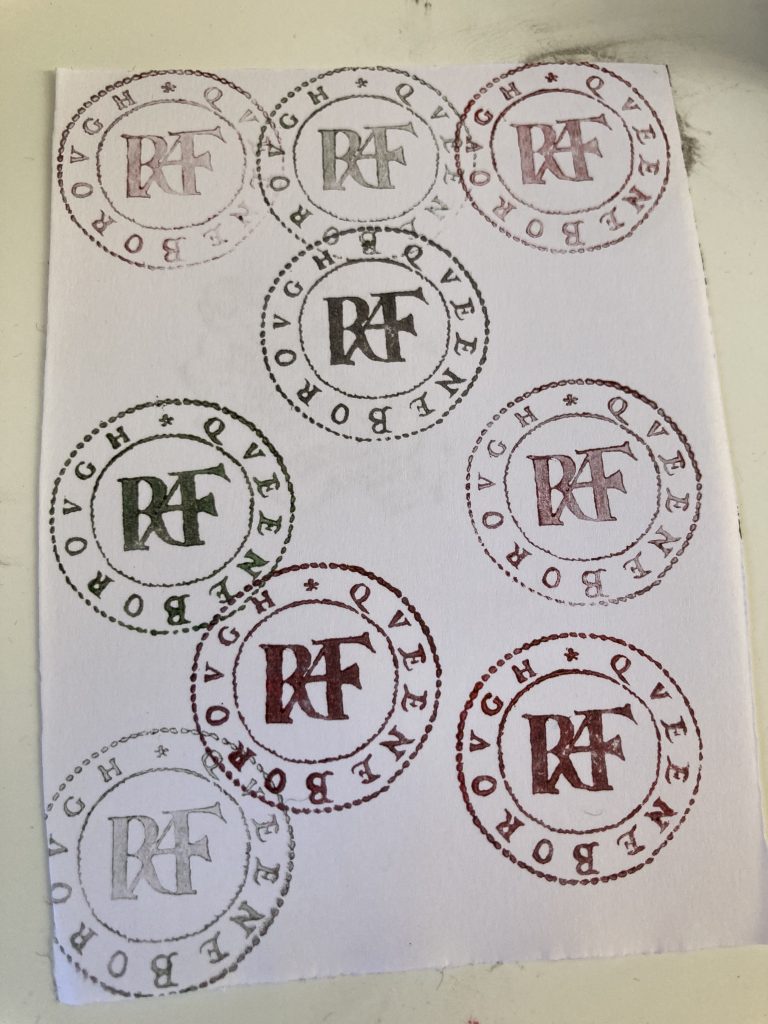
This Queenborough economy continued up until the early 19th Century. As part of this education project, some special rubber stamps on the Copperas Coins were made, and the pupils were able to create their own cards with Copperas Coin imprints.
As part of Mark’s talk, he also shared information on the Copperas Factory and the development of Queenborough’s very own Copperas coin economy. Copperas is a term used for iron sulphate, it’s formed as part of fossilised wood, and can be found in abundance along the Sheppey shoreline.
From 1579 onwards, Queenborough residents would forage this natural resource along the seashore and bring it to the Copperas Factory, where it would be used to help make ink and other products. In return, they would be given Copperas Coins which they could use in the local shops of Queenborough to buy food and other staples.
This Queenborough economy continued up until the early 19th Century. As part of this education project, rubber stamps of the Copperas Coin imprint were made, and the pupils were able to create their own Copperas Coin cards to take away with them and keep a little bit of Queenborough’s rich history in their pocket.
With thanks to Caroline Howard for bringing the education experience together, the volunteers Patrick Moore and Maureen Swarbrick, to local historian Mark Kennedy and musician Geoff Reed from Big Fish Arts.
This event has been kindly supported by Sheerness Town Council and Minster-on-Sea Parish Council.
